
Over the past 3 years, I’ve worked with dozens of military units and learned a lot. Here are the top 5 lessons learned, which now form the pillars of my human performance approach. They are non-negotiable.
Lessons learned:
Build relationships early. The first Commanding Officer I worked with taught me this lesson during my first meeting with him. "Grab coffee from the pilot units every morning, and just talk to them like a person". Those coffee chats led to many doors opening, inlcuding the "mental minute". It's easy to get sucked up by administration and emails in a closed office, but that's where relationships wither.
Work within the cracks. Everyone is busy. Instead of adding separate classroom and gym sessions to teach people about human performance, integrate value-adds into the operational tempo where people work. For example, I started the 1-2 min long "Mental Minute" segment during morning weather briefs, passing on many performance strategies in an organic way.
Solve real problems that matter. Applying frameworks from an IDEO U course on design thinking (thanks for the tip Angus Mugford), I've mapped out the client journey, removed frustations, and optimized the moments that matter. My role was often clarifying what the problem was, being an investigative journalist to figure out why it's happening, and then bringing the right stakeholders in to co-create solutions.
Be a curious rebel. I've run into rules and policies that don't make sense, and through a curious lens changed those myself (or advocated for changing them). Just because something is status quo, doesn't mean that it always needs to be. Behind every rule or policy sits a human being who can change it.
Trust your feet. Improv master Dave Morris taught me this lesson when I was performing improv shows, and it applied to the military context. We process a of our environment subconsciously and spiritually, wihtout our conscious awareness. Sometimes we get an idea to go somewhere, but stifle it so we can focus on the current task. I've realized that our feet know where we need to be at what time. It takes courage to trust your instinct as we often use the rational part of the brain to make decisions.
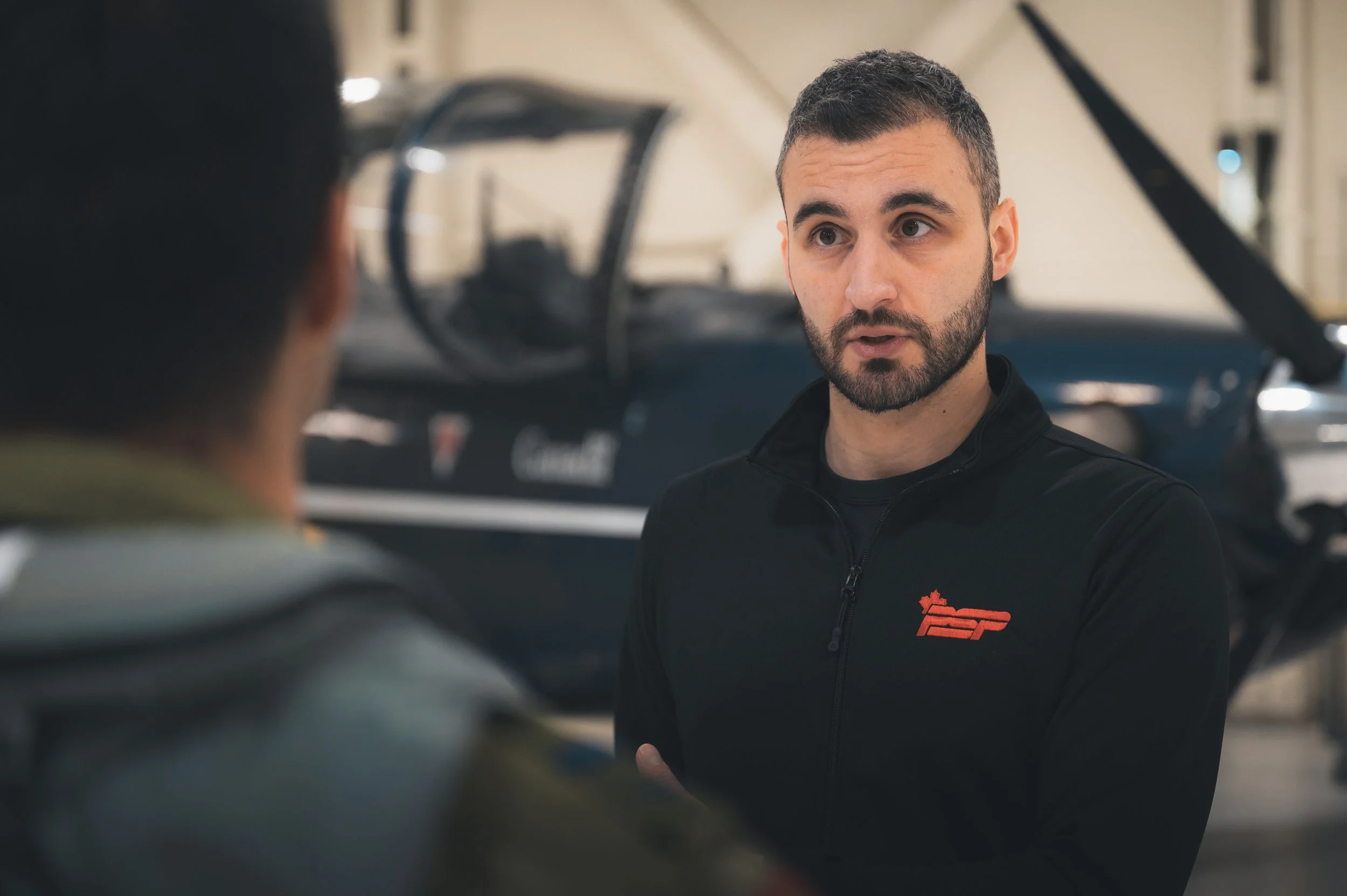
Talking with a military pilot in the hangar before a mission. Photo credit: Kenneth Drake / DND
Background:
With the RCAF, I helped shape a pilot development program that creates a positive pilot experience, builds a high performance culture that cares about the human, and works with leadership to speed up pilot development.
With the Royal Canadian Navy, I have been leading a team of 20 team members delivering human performance programs including assessments for speacialiazed units, fitness testing and programming, physical rehab programs, and sports programs/events.
Write to me if you’re interested in hearing more, or looking to hire my agency to support you or your team.